Up next in 10


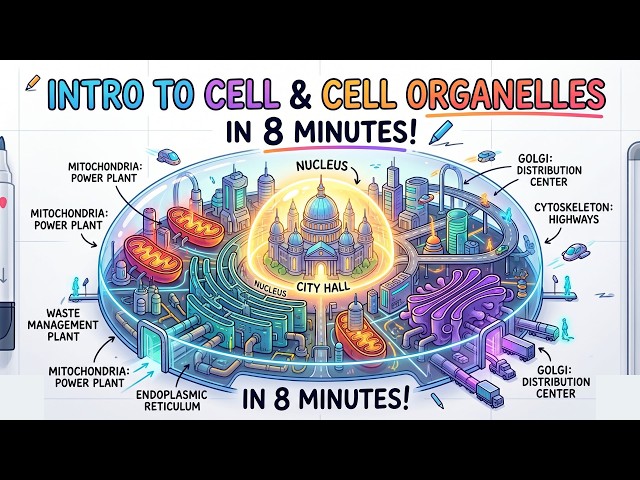
Cell is the basic structural and functional unit of life.
Happy Learning✌️@biologyexams4u
===============================================================
We really appreciate your support 👍
Thank you so much :)
▶Enroll now. Our free certificate course on Introduction to Recombinant DNA Technology
https://alison.com/course/introduction-to-recombinant-dna-technology?utm_source=alison_user&utm_medium=affiliates&utm_campaign=22177687
📙Introduction to Recombinant DNA Technology – Download free E Book
https://www.biologyexams4u.com/2022/09/enroll-now-new-online-course-on.html
==============================================================
Biologyexams4u network is dedicated to create and share simplified biology learning resources to students as well as teachers globally. We firmly believe that our simplified content will help you to improve your understanding and generate curiosity and interest in Life Sciences.
Thank you so much for your consistent support.
Visit our Websites:
✅ About Biology Exams, Preparation tips, and Notes: https://www.biologyexams4u.com/
✅ MCQ in biology: Wide collection on Multiple Choice in Biology
https://www.mcqbiology.com/
Show More Show Less View Video Transcript
0:04
So, here's our game plan for today.
0:06
We're going to start with what a cell
0:08
even is, then check out the two major
0:10
types of cellular cities. After that,
0:12
we'll tour all the key departments that
0:13
keep things running. You know, the
0:15
control center, the power plants, and
0:17
we'll wrap up by looking at some pretty
0:18
cool specialized features. Okay, let's
0:21
dive right in.
0:23
Before we can understand the city, we've
0:25
got to look at the bricks, right? So,
0:27
what exactly is a cell? And how in the
0:30
world did we even find out about
0:31
something so tiny? So, here's the bottom
0:34
line. It doesn't matter if we're talking
0:36
about a single-celled amoeba swimming in
0:39
a pond, or, you know, one of the
0:40
trillions of cells that make you you,
0:43
they all play by the same basic rules.
0:45
They've all got these three components:
0:47
a border, that's the cell membrane, the
0:50
jelly-like stuff inside called
0:51
cytoplasm, and, of course, the genetic
0:54
blueprint, the DNA, that's running the
0:55
whole show.
0:57
And this timeline is so cool because it
0:59
really shows you that science isn't just
1:01
one aha moment, it's more like a relay
1:04
race played across centuries. I mean, it
1:06
kicked off way back in 1665 with Robert
1:09
Hooke. He's looking at a slice of cork
1:11
under a microscope and sees these tiny
1:13
little rooms, and he calls them cells.
1:15
But get this, it took almost 200 more
1:18
years of other scientists adding their
1:19
own pieces to the puzzle before we got
1:22
the full picture we have today.
1:24
So, it all boils down to these three big
1:27
ideas, and they completely changed
1:28
biology forever. That last point
1:31
especially, all cells arise from
1:33
pre-existing cells, that was a
1:35
game-changer. It totally threw out old
1:37
kind of weird ideas like spontaneous
1:39
generation, the belief that life could
1:41
just, poof, appear out of nowhere, like
1:43
mice from a pile of grain.
1:45
Nope, turns out life only comes from
1:47
life.
1:49
All right, next stop on our tour. Now
1:52
that we know what a cell is, let's see
1:54
how these little cities are actually
1:55
designed. And it turns out there are
1:57
basically two completely different
1:59
blueprints out there, a really simple
2:01
one and a much more complex one.
2:03
Biggest difference between these two
2:05
city plans? It all comes down to these
2:08
things called organelles. I love this
2:10
word. It literally means little organs,
2:12
and that's exactly what they are. Think
2:14
of them as the different buildings and
2:15
departments inside our cell city. You've
2:18
got the city hall, the factories, the
2:20
post office, each one has a very
2:22
specific job to do.
2:24
Okay, this table really lays out the
2:26
great divide in the cellular world. On
2:28
one side, you have prokaryotic cells.
2:31
Think of these like a simple studio
2:32
apartment. Everything's just kind of
2:34
mixed together in one main room. Their
2:36
DNA, it just floats around in the
2:38
cytoplasm.
2:39
But then you have eukaryotic cells.
2:41
That's what we're made of, and plants
2:43
and fungi. These are like huge mansions
2:45
with tons of different rooms, those
2:47
organelles, for all the specialized
2:49
tasks. This whole setup, this
2:51
compartmentalization, is what allows
2:53
them to be so much more complex.
2:55
So, for the rest of our tour, we're
2:57
going to focus on that fancy eukaryotic
3:00
city. And where do you start a tour of a
3:02
city? Well, at city hall, of course, the
3:05
control center, the nucleus.
3:07
Yeah, the nucleus is the absolute
3:09
command center. It's even got its own
3:11
double-layered security system around
3:13
it, and inside, that's where the city's
3:15
master blueprint is kept, the DNA. Now,
3:18
the DNA is usually all tangled up in a
3:20
form called chromatin, and it holds the
3:22
instructions for literally everything
3:24
the cell does, from what proteins to
3:26
build to when it's time to divide.
3:28
And tucked away inside city hall,
3:30
there's this super important little
3:31
office called the nucleolus.
3:34
You can think of it as the factory that
3:35
builds the city's factory workers. And
3:38
those workers? They're called ribosomes,
3:40
and we're going to see them in action
3:41
right now.
3:43
Okay, so let's follow a work order
3:45
that's just been sent out from the
3:46
nucleus. We're going to watch how this
3:48
city takes a small piece of that master
3:50
blueprint and uses it to build one of
3:52
its most critical products, proteins.
3:55
Right next to the nucleus is this
3:57
massive network of membranes. It's
3:59
called the endoplasmic reticulum, or
4:01
just ER for short. It's basically the
4:03
city's highway system, and it has two
4:06
different neighborhoods. You've got the
4:07
rough ER, which is covered in all those
4:10
little ribosome workers we just
4:11
mentioned. That's what makes it look
4:12
rough, and it's the main factory for
4:14
building proteins. Then there's the
4:16
smooth ER. No ribosomes here. Its job is
4:19
different. It makes fats and helps get
4:21
rid of toxins.
4:22
This is so cool. It shows the entire
4:25
assembly line from start to finish.
4:27
Okay, step one, a ribosome, one of our
4:30
little workers, reads the instructions
4:32
that came from the nucleus. Step two,
4:34
the brand new protein it just built goes
4:36
into the rough ER, that highway system,
4:39
to get folded and modified. Then, step
4:42
three, it gets packaged up into a little
4:43
transport bubble called a vesicle. And
4:46
finally, step four, that bubble travels
4:48
over to the Golgi apparatus, which is
4:50
like the city's post office, for some
4:51
final touches, sorting, and shipping out
4:54
to its final destination. It's just an
4:56
incredibly coordinated process. Of
4:58
course, a city is way more than just
5:00
factories. It needs utilities to keep
5:02
the lights on and the streets clean. So,
5:04
let's do check out the power plants, the
5:06
recycling centers, and the storage
5:08
warehouses that keep this whole cellular
5:10
city humming.
5:11
You've definitely, definitely heard this
5:13
one before, the powerhouse of the cell.
5:16
And you know what? It's famous for a
5:17
reason. It is absolutely true. These
5:20
amazing little organelles, the
5:22
mitochondria, are the power plants for
5:24
both animal and plant cells. They
5:26
generate all the energy needed for
5:28
everything else to happen.
5:30
But what does being a powerhouse
5:31
actually mean? Well, it means that
5:33
through this process called cellular
5:35
respiration, mitochondria take the
5:37
energy locked in food like glucose, and
5:40
they convert it into a special energy
5:42
molecule called ATP. And ATP is the
5:44
cell's cash. It's the electricity that
5:47
powers every single machine, every
5:49
vehicle, every light in the entire city.
5:52
Without ATP, everything grinds to a
5:54
halt.
5:55
And just like any well-run city, the
5:57
cell has to deal with trash and storage.
5:59
That's where lysosomes come in. They're
6:01
the sanitation department. Basically,
6:03
bags of enzymes that break down old,
6:05
worn-out parts and any junk that gets
6:07
inside. And then you have vacuoles.
6:09
Think of these as the city's storage
6:11
warehouses, holding onto essential
6:13
supplies like water and food until
6:14
they're needed.
6:15
Okay, for the grand finale of our tour,
6:18
let's step outside our animal cell city
6:20
for a moment and look at a different
6:22
model, the plant cell. Now, it has most
6:25
of the same stuff we've already seen,
6:27
but it's got a few incredible, unique
6:29
additions that let it live a completely
6:32
different lifestyle.
6:33
These three features are total
6:35
game-changers. First, the cell wall.
6:38
It's this rigid layer on the outside
6:40
that gives the plant structure. It's
6:41
like its own skeleton, something animal
6:43
cells just don't have. Then there's that
6:45
giant central vacuole. It's basically a
6:48
massive water balloon that pushes
6:49
against the cell wall and keeps the
6:51
plant firm. And maybe most important of
6:53
all, chloroplasts. These are the cell's
6:56
solar panels. They capture sunlight and
6:58
use it to make their own food.
6:59
Incredible.
7:01
And here's a fantastic little fact to
7:03
tuck away. While only plant cells have
7:05
chloroplasts to make their own food from
7:07
sunlight, they still have to turn that
7:10
food into usable ATP energy. So, what
7:12
does that mean? It means they have two
7:14
power sources. They have chloroplasts to
7:17
make the sugar, and they have
7:19
mitochondria to burn the sugar for ATP.
7:21
That's double the power.
7:23
I think this quote just sums it up
7:25
perfectly. The cell isn't just a random
7:27
bag of goo, it's a city. It's a master
7:30
piece of coordination, this tiny,
7:32
self-sustaining universe of microscopic
7:34
machinery, all working together in
7:36
perfect harmony.